
Daily Conversation Phrases
Learn 30 natural short expressions used in everyday Japanese: そうですね、なるほど、ちょっと待って、大丈夫ですか. Improve conversational flow.
🎯 Goal: To equip students with the ability to confidently use and understand essential N4-level daily phrases, enabling them to initiate, sustain, and respond to common social interactions and casual conversations in natural Japanese.
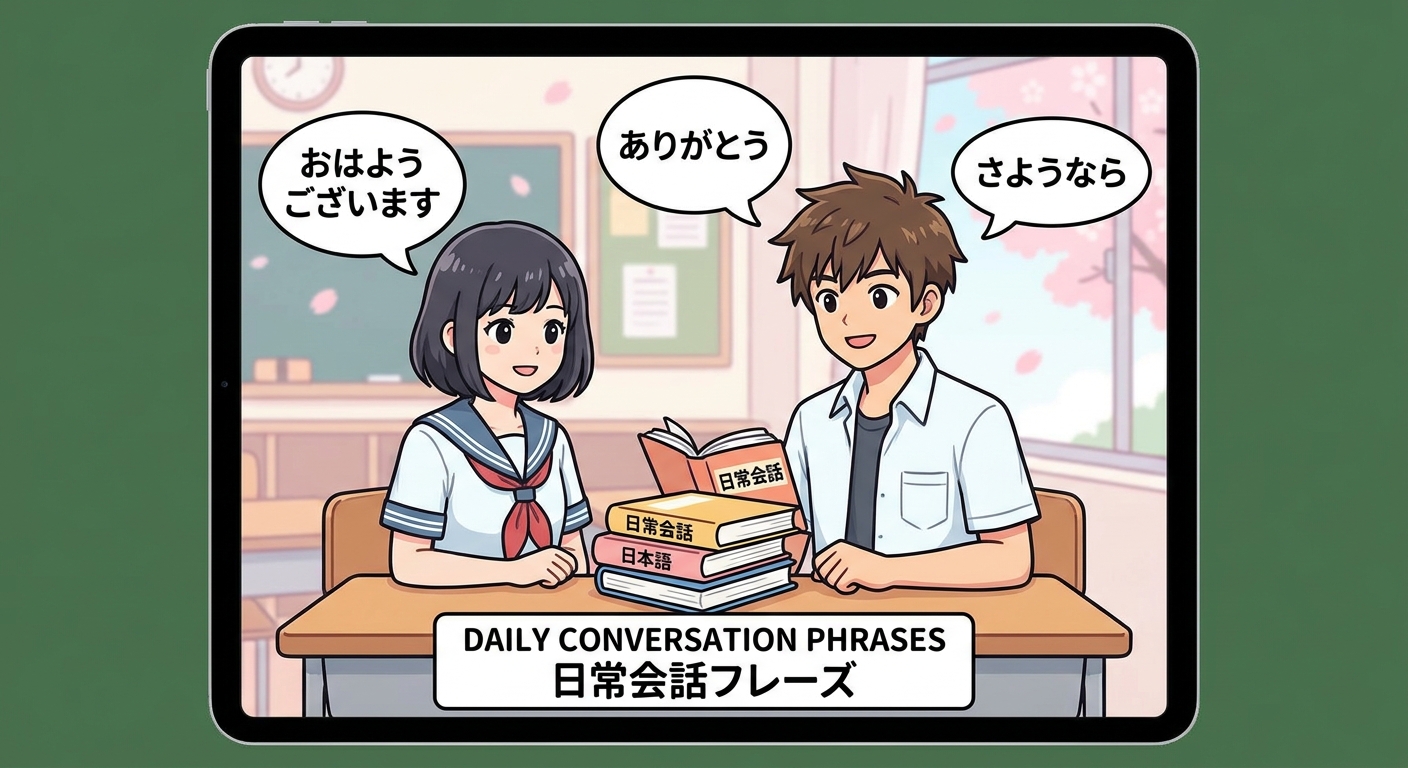
Introduction
Welcome to the "Daily Conversation Phrases" lesson, tailored for JLPT N4 learners. Moving beyond rigid textbook grammar, this lesson bridges the gap between structured Japanese and natural, everyday communication. You will explore practical, high-frequency expressions used by native speakers in various social contexts—such as making polite requests, expressing preferences, responding to invitations, and casual daily interactions. By mastering these essential phrases and their cultural nuances, you will build the confidence needed to navigate everyday life in Japan, foster smoother social connections, and transition from passive comprehension to active, natural spoken Japanese.
Lesson Content
Master N4 Daily Conversation: Sounding Natural and Polite
Welcome to your N4 Japanese study guide! Now that you have mastered basic N5 survival phrases, it is time to transition into natural, flowing conversations.
At the N4 level, daily communication is not just about making yourself understood; it is about conveying nuance, politeness, and empathy. Today, we will master three essential conversational frameworks that will instantly make you sound more like a native speaker.
1. Making Gentle Suggestions: 〜たらどうですか
When a friend has a problem, simply giving a direct command can sound harsh. Instead, use 〜たらどうですか (~tara dō desu ka), which translates to "How about...?" or "Why don't you...?"
Grammar Structure
- Verb (Plain Past / Ta-form) + らどうですか
Examples in Context
- 少し休んだらどうですか。
- Sukoshi yasundara dō desu ka.
- How about taking a little rest?
- もっと野菜を食べたらどうですか。
- Motto yasai o tabetara dō desu ka.
- Why don't you eat more vegetables?
💡 Tutor’s Tip: While polite, this phrase can sometimes sound patronizing if used with superiors (like your boss or teacher). Use it with peers, subordinates, or family members!
2. Describing Daily Life: 〜やすい & 〜にくい
To describe how easy or difficult something is to do in your daily routine, use the suffixes 〜やすい (yasui - easy to) and 〜にくい (nikui - hard to). These turn verbs into i-adjectives.
Grammar Structure
- Verb Stem + やすい / にくい
Examples in Context
- このペンはとても書きやすいです。
- Kono pen wa totemo kakiyasui desu.
- This pen is very easy to write with.
- 日本語の漢字は覚えにくいですね。
- Nihongo no kanji wa oboenikui desu ne.
- Japanese kanji are hard to memorize, aren't they?
3. Asking for Favors Politely: 〜ていただけませんか
In daily life, you will constantly need to ask for help—whether asking for directions, requesting a document, or asking someone to speak slower. 〜ていただけませんか (~te itadakemasen ka) is the gold standard for polite requests.
Grammar Structure
- Verb (Te-form) + いただけませんか
Examples in Context
- もう一度言っていただけませんか。
- Mō ichido itte itadakemasen ka.
- Could you please say that one more time?
- 英語で書いていただけませんか。
- Eigo de kaite itadakemasen ka.
- Could you please write it in English?
Quick Reference Summary
| English Phrase | Japanese Pattern | N4 Conversational Example |
|---|---|---|
| "How about...?" | Verb (Ta-form) + らどうですか | 薬を飲んだらどうですか。<br>(How about taking some medicine?) |
| "Easy to..." | Verb Stem + やすい | このスマホは使いやすいです。<br>(This smartphone is easy to use.) |
| "Hard to..." | Verb Stem + にくい | この字は小さくて読みにくいです。<br>(This font is small and hard to read.) |
| "Could you please?" | Verb (Te-form) + いただけませんか | 写真を撮っていただけませんか。<br>(Could you please take a photo?) |
Practice Challenge!
Try to translate this natural dialogue into Japanese using today's patterns:
- A: "This Japanese map is hard to read."
- B: "How about asking that person over there?"
(Scroll down for the answer key!)
Answer Key:
A: この日本の地図は読みにくいです。
B: あそこの人に聞いたらどうですか。
Exercises
Daily Conversation Phrases (Exercises)
Exercises for Daily Conversation Phrases
Review the grammar and vocabulary, and try to fill in the blanks or write sentences based on the prompts.
Examples
すみません、この近くにコンビニはありますか。
Sumimasen, kono chikaku ni konbini wa arimasu ka.
Excuse me, is there a convenience store nearby?
今週末、一緒に映画を見に行きませんか。
Konshūmatsu, issho ni eiga o mini ikimasen ka.
Would you like to go see a movie together this weekend?
ここで写真を撮ってもいいですか。
Koko de shashin o tottemo ii desu ka.
Is it okay to take a picture here?
Practice Drills
Lesson Materials
Vocabulary (5)
Grammar (3)
Kanji (0)
No kanji characters in this lesson.
Kana (0)
No kana characters in this lesson.