
Opinion and Explanation Texts
Read structured N3-level passages (300–450 characters) expressing opinions or explaining topics. Practice identifying the main argument and supporting details.
🎯 Goal: By the end of this lesson, you will be able to identify the main thesis, distinguish between factual explanations and personal opinions, and comprehend logical transitions in N3-level expository texts and essays.
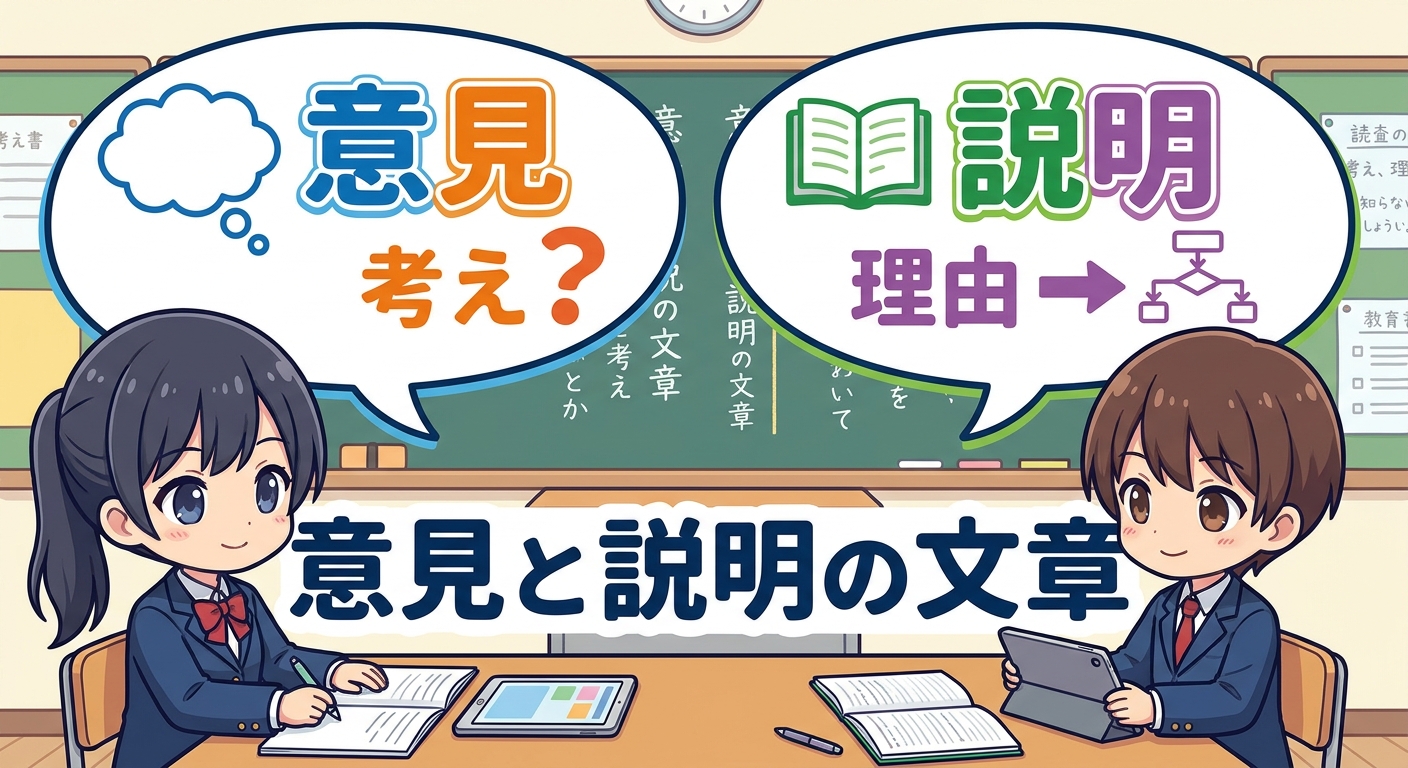
Introduction
Welcome to the N3 lesson on Opinion and Explanation Texts. At the intermediate level, reading Japanese shifts from simple everyday narratives to more structured essays, editorials, and expository articles. This lesson is designed to help you navigate these complex texts by identifying the writer's core arguments and distinguishing between objective facts and subjective opinions. You will learn to recognize key transition words, logical connectors, and specific grammatical structures—such as 〜に違いない (must be) or 〜ではないだろうか (isn't it the case that)—that signal the author’s perspective. Mastering these skills is essential for both the JLPT N3 reading section and real-world Japanese literacy.
Lesson Content
Master Class: Opinion and Explanation Texts (意見と説明の文章)
Level: JLPT N3
Focus: Reading Comprehension (読解) & Written Expression (文法)
Welcome to your N3 master class. Moving from N4 to N3 means transitioning from simple, factual descriptions to understanding nuanced opinions (意見 - いけん) and logical explanations (説明 - せつめい).
In N3 reading sections and daily Japanese media, authors rarely state their opinions bluntly. Instead, they use specific grammatical structures to soften their claims or build logical arguments. Today, we will master these key patterns and learn how to dissect N3-level texts.
1. Core Grammar for Opinions & Explanations
Pattern A: ~のではないだろうか / ~のではないか
- Meaning: "Isn't it the case that...?" / "I think that... (rhetorical/polite opinion)"
- Usage: Authors use this to state their main opinion gently, making it sound like an invitation to agree rather than an aggressive demand.
- Form:
- Verb (Plain) + のではないだろうか
- い-Adj + ののではないだろうか
- な-Adj + な + のではないだろうか
- Noun + な + ののではないだろうか (Note: 「だろうか」 is more formal than 「か」)
Example:
現代人はスマートフォンの画面を見すぎているのではないだろうか。
(Isn't it the case that modern people look at smartphone screens too much? / I believe modern people look at screens too much.)
Pattern B: ~ということだ
- Meaning: "This means that..." / "The fact is..."
- Usage: Used to define a concept, summarize a point, or draw a logical conclusion from evidence.
- Form: Plain Form + ということだ
Example:
売り上げが落ちている。つまり、この商品は人気がないということだ。
(Sales are falling. In other words, it means this product is not popular.)
Pattern C: ~(の)に対して (にたいして)
- Meaning: "In contrast to..." / "Unlike..."
- Usage: Essential for explanatory texts comparing two contrasting ideas, data points, or behaviors.
- Form: Noun + に対して / [Verb Plain + の] + に対して
Example:
都市部の人口が増えているのに対して、地方では減少し続けている。
(In contrast to the rising population in urban areas, it continues to decrease in rural areas.)
In N3 reading comprehension, you will often be asked: 「筆者が最も言いたいことは何か」 (What does the author want to say the most?)
To find the answer quickly, train your eyes to look for these transition words (接続詞 - せつぞくし) and markers near the end of the passage:
- つまり (In other words / In short): Signals a summary of the author's main point.
- したがって (Therefore): Introduces the logical conclusion.
- しかし / だが (However): Signals a shift from general facts to the author's actual opinion.
3. Sample Text Analysis
Read the N3-level paragraph below. Pay close attention to the highlighted structures.
近年、電子書籍(でんししょせき)を利用する人が増えている。紙の本に対して、電子書籍は軽くて持ち運びが便利だというメリットがある。しかし、紙の本には「手でページをめくる楽しさ」がある。
つまり、どちらが良いかということではなく、状況に合わせて使い分けることが大切なのではないだろうか。
Breakdown & Translation:
- Sentence 1: Introduces the topic (the rise of e-books).
- Sentence 2 (Comparison): Uses ~に対して to contrast paper books and e-books.
- Sentence 3 (The Turn): Uses しかし to introduce a counterpoint about paper books.
- Sentence 4 (The Conclusion): Uses つまり to signal the final summary, and wraps up with ~のではないだろうか to deliver the author's core opinion: "Isn't it important to use them differently depending on the situation?"
4. Quick Challenge
Translate the following sentence into Japanese using N3 grammar:
"Unlike last year, this year's exam is difficult. Therefore, isn't it necessary to study more?"
(Key Vocabulary: 去年 - きょねん, 今年 - ことし, 試験 - しけん, 難しい - むずかしい, したがって, もっと, 勉強する, 必要 - ひつよう)
<details> <summary><b>Click to reveal the model answer</b></summary></details>去年の試験に対して、今年の試験は難しい。したがって、もっと勉強する必要があるのではないだろうか。
Exercises
Opinion and Explanation Texts (Exercises)
Exercises for Opinion and Explanation Texts
Review the grammar and vocabulary, and try to fill in the blanks or write sentences based on the prompts.
Examples
現代社会において、インターネットは不可欠なものになっているが、使いすぎには注意すべきではないだろうか。
Gendai shakai ni oite, intānetto wa fukaketsu na mono ni natte iru ga, tsukaisugi ni wa chūi subeki de wa nai darō ka.
In modern society, the internet has become indispensable, but shouldn't we be careful about using it too much?
最近、電子書籍を利用する人が増えている。なぜなら、持ち運びが便利で、いつでも読めるからだ。
Saikin, denshi shoseki o riyō suru hito ga fuyete iru. Nazenara, mochihakobi ga benri de, itsudemo yomeru kara da.
Recently, the number of people using e-books is increasing. This is because they are convenient to carry around and can be read anytime.
若者のテレビ離れが進んでいると言われているが、動画配信サービスの人気を考えると、映像メディア自体が嫌われているわけではない。
Wakamono no terebi banare ga susunde iru to iwarete iru ga, dōga haishin sābisu no ninki o kangaeru to, eizō media jitai ga kirawarete iru wake de wa nai.
It is said that young people are moving away from television, but considering the popularity of video streaming services, it does not mean that visual media itself is disliked.
Practice Drills
Lesson Materials
Vocabulary (5)
Grammar (3)
Kanji (0)
No kanji characters in this lesson.
Kana (0)
No kana characters in this lesson.