
Reasons to Learn Japanese: A Guide for JLPT N5
Why Learn Japanese? A Guide for JLPT N5 Aspirants
Learning a new language is a significant undertaking, and choosing Japanese, especially when preparing for the JLPT N5, is a decision that opens doors to a rich culture, unique experiences, and a different way of thinking. This guide explores compelling reasons to learn Japanese, specifically tailored for those embarking on their JLPT N5 journey. We'll break down the motivations into manageable sections, providing insights and examples to fuel your learning process. Remember, consistent effort and structured guidance make the challenge achievable.
Table of Contents
- Understanding the JLPT N5 Exam Structure
- Cultural Immersion and Appreciation
- Career Opportunities and Professional Growth
- Cognitive Benefits of Learning Japanese
- Travel and Exploration in Japan
- Access to Japanese Media and Entertainment
- Personal Enrichment and Self-Discovery
Understanding the JLPT N5 Exam Structure
Before diving into the broader reasons, understanding the JLPT N5 itself is crucial. It's the first step in a structured learning path. Familiarizing yourself with the exam's components—vocabulary, grammar, reading, and listening—provides immediate, tangible goals. This structure helps maintain motivation by showing clear progress. Aiming for the N5 isn't just about passing a test; it's about building a solid foundation for further language study.
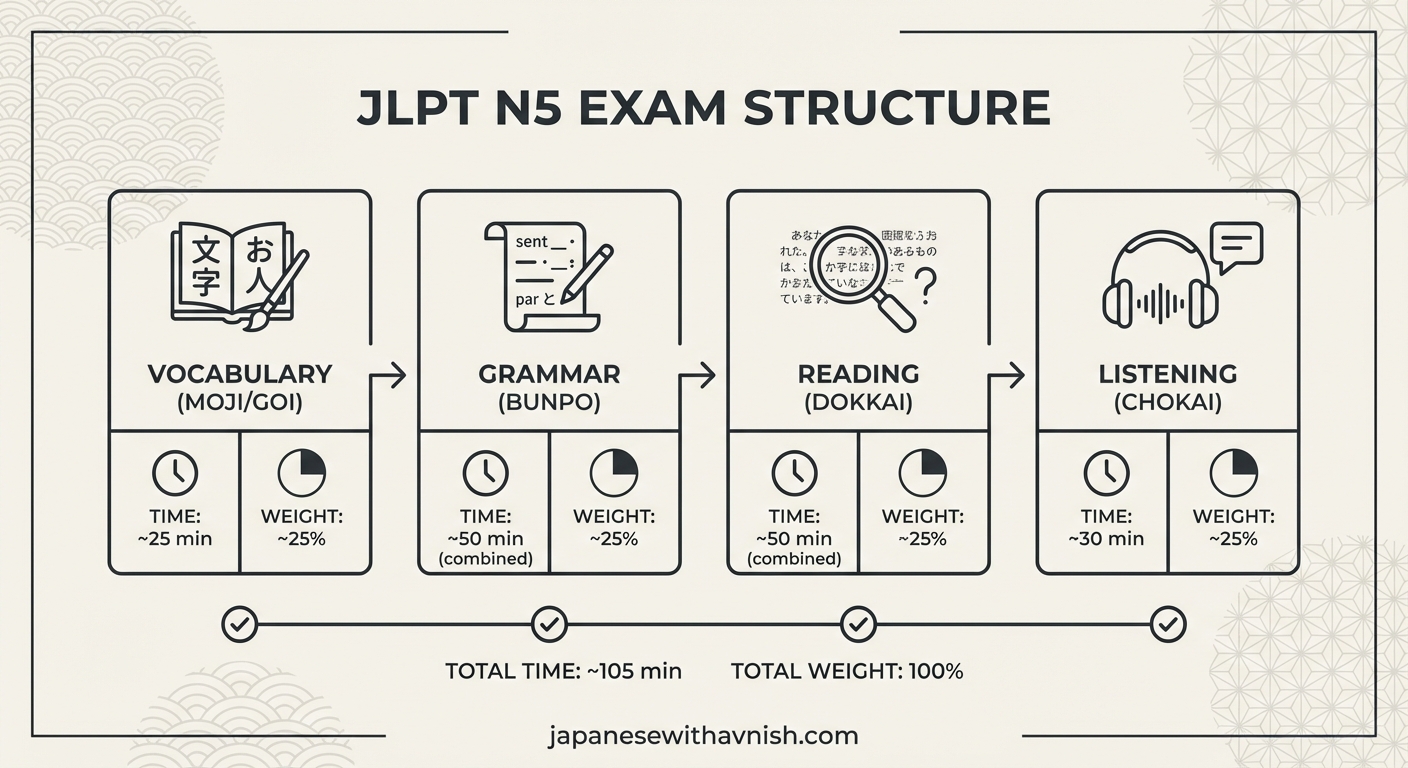
The N5 tests basic comprehension. You'll learn essential grammar points like:
- は (wa): Topic marker. Example: これは本です (Kore wa hon desu) - This is a book.
- が (ga): Subject marker. Example: 猫が好きです (Neko ga suki desu) - I like cats.
- です (desu): Copula (to be). Example: 私は学生です (Watashi wa gakusei desu) - I am a student.
- ます (masu): Polite verb ending. Example: 食べます (Tabemasu) - I eat.
Knowing these basics will set you on the path to understanding more complex sentence structures later on. Explore our Premium Pass for a structured study system.
Cultural Immersion and Appreciation
Learning Japanese opens a gateway to a rich and nuanced culture. From traditional arts like calligraphy (書道 - Shodō) and tea ceremony (茶道 - Chadō) to modern phenomena like anime and manga, understanding the language allows for a deeper appreciation. You'll gain insights into Japanese customs, etiquette, and social values that are often lost in translation. This cultural immersion enriches your understanding of the world and fosters cross-cultural empathy.
For example, the concept of "omotenashi" (おもてなし), or selfless hospitality, is deeply ingrained in Japanese culture. Learning the language helps you understand the subtle nuances of this concept, which extends beyond simple politeness.
Career Opportunities and Professional Growth
In today's globalized world, bilingualism is a valuable asset. Japanese proficiency can significantly enhance your career prospects, particularly in industries such as technology, manufacturing, tourism, and translation. Many multinational companies seek individuals with Japanese language skills to facilitate communication and collaboration with Japanese partners and clients. Even a basic understanding of Japanese can set you apart from other candidates.
Furthermore, Japan's strong economy and technological advancements create opportunities for those seeking international work experience. Knowing Japanese makes it easier to navigate the job market and integrate into the Japanese workplace.
Cognitive Benefits of Learning Japanese
Learning a new language, especially one as different from English as Japanese, can be a genuine mental workout. Picking up hiragana, katakana, and kanji challenges your brain in new ways and gives memory, attention, and flexible thinking a real workout. Individual results vary, and language study should not be presented as a guaranteed way to prevent cognitive decline — but it is a rewarding, engaging habit in its own right.
For example, memorizing kanji (漢字) requires visual and spatial reasoning, while understanding Japanese grammar demands logical thinking. These mental exercises contribute to overall cognitive health.
Travel and Exploration in Japan
One of the most compelling reasons to learn Japanese is the opportunity to travel and explore Japan with greater ease and depth. While English is spoken in some tourist areas, knowing Japanese allows you to venture off the beaten path, interact with locals on a more personal level, and experience the authentic culture. You'll be able to navigate public transportation, order food in restaurants, and ask for directions without relying solely on English. This enhances your travel experience and creates lasting memories.
Imagine being able to read signs in Japanese, understand announcements on trains, and engage in conversations with local residents. These interactions provide invaluable insights into Japanese life and culture.
Access to Japanese Media and Entertainment
Japanese media and entertainment offer a vast and diverse range of content, from classic films and literature to contemporary anime, manga, and video games. Learning Japanese allows you to access these resources in their original form, without relying on translations or subtitles. This provides a more authentic and nuanced understanding of the stories and characters. It also allows you to discover new and emerging artists and creators who may not be widely known outside of Japan.
For example, watching anime (アニメ) in Japanese allows you to appreciate the voice acting and the subtle nuances of the dialogue. Reading manga (漫画) in Japanese provides a deeper understanding of the storytelling and the cultural references.
Personal Enrichment and Self-Discovery
Finally, learning Japanese can be a deeply enriching and rewarding personal experience. It challenges you to step outside of your comfort zone, embrace a new culture, and develop new skills. It can also lead to self-discovery as you explore your own interests and passions through the lens of Japanese language and culture. Whether you're interested in history, art, music, or cuisine, learning Japanese can open up new avenues for personal growth and fulfillment.
Learning Japanese is not just about acquiring a new skill; it's about embarking on a journey of self-discovery and expanding your horizons. It's a testament to your curiosity, your willingness to learn, and your appreciation for the world's diverse cultures.
If you prefer a structured, ready-made study system, explore our Premium Pass designed for serious learners.
Summary
Learning Japanese, particularly with the goal of passing the JLPT N5, is a rewarding endeavor that offers far more than just a certificate. This foundational level provides a structured entry point, testing basic comprehension of essential grammar and vocabulary, which creates a tangible goal and builds a solid base for future study. Beyond the exam, the language serves as a gateway to profound cultural immersion, allowing for a deeper appreciation of everything from traditional arts like tea ceremony to modern anime, and fostering a genuine understanding of nuanced concepts like "omotenashi" (hospitality). Professionally, Japanese proficiency is a significant asset in our globalized economy, opening doors in technology, tourism, and international business. On a personal level, the cognitive benefits are substantial; mastering a distinct writing system and grammar enhances memory, problem-solving, and mental flexibility. For travelers, even basic skills transform a trip to Japan, enabling authentic interactions and easier navigation beyond tourist hubs. Furthermore, learning the language provides direct access to a rich world of media—films, literature, manga, and games—in their original, untranslated forms. Ultimately, the journey of learning Japanese is one of personal enrichment, challenging you to expand your horizons and discover new aspects of both another culture and yourself.
What should you do next?
Recommended next reads
My Journey from N5 Toward N3
A first-person account of going from zero Japanese to JLPT N3 — the real study rhythm, the plateaus, and what actually worked.
Avnish · 7/16/2026
Read →
Mistakes I Made While Learning Japanese
The study habits that quietly slowed my Japanese learning down for months, and what I changed instead.
Avnish · 7/16/2026
Read →
How I Study Kanji Every Day
My real daily kanji routine: radicals first, small daily batches, handwriting, and reviewing in context.
Avnish · 7/16/2026
Read →
Building Japanese with Avnish as a Learner
Why I built this platform as a student, not an expert. A structured guide to JLPT N5 with grammar, vocabulary, and study tips.
Avnish · 7/14/2026
Read →
Best Books for JLPT N5: A Structured Guide for Your Foundation
A structured guide to the best textbooks, kanji, grammar, and practice books for JLPT N5. Build a solid foundation with our expert recommendations and study plan.
Japanese with Avnish Editorial Team · 3/3/2026
Read →
JLPT N5 Roadmap: Your Structured Guide to Success
A comprehensive, step-by-step guide to passing the JLPT N5. Covers exam structure, study plan, essential grammar, vocabulary, and kanji for beginners.
Japanese with Avnish Editorial Team · 3/3/2026
Read →