
Work and Society Kanji
Learn 5 work and society kanji: 仕事社会問題活動. Build vocabulary compounds and use in professional sentences.
🎯 Goal: To master the reading, writing, and contextual usage of key N3 kanji related to work, employment, and societal structures, enabling you to read business correspondence, understand job listings, and comprehend news topics about Japanese society.
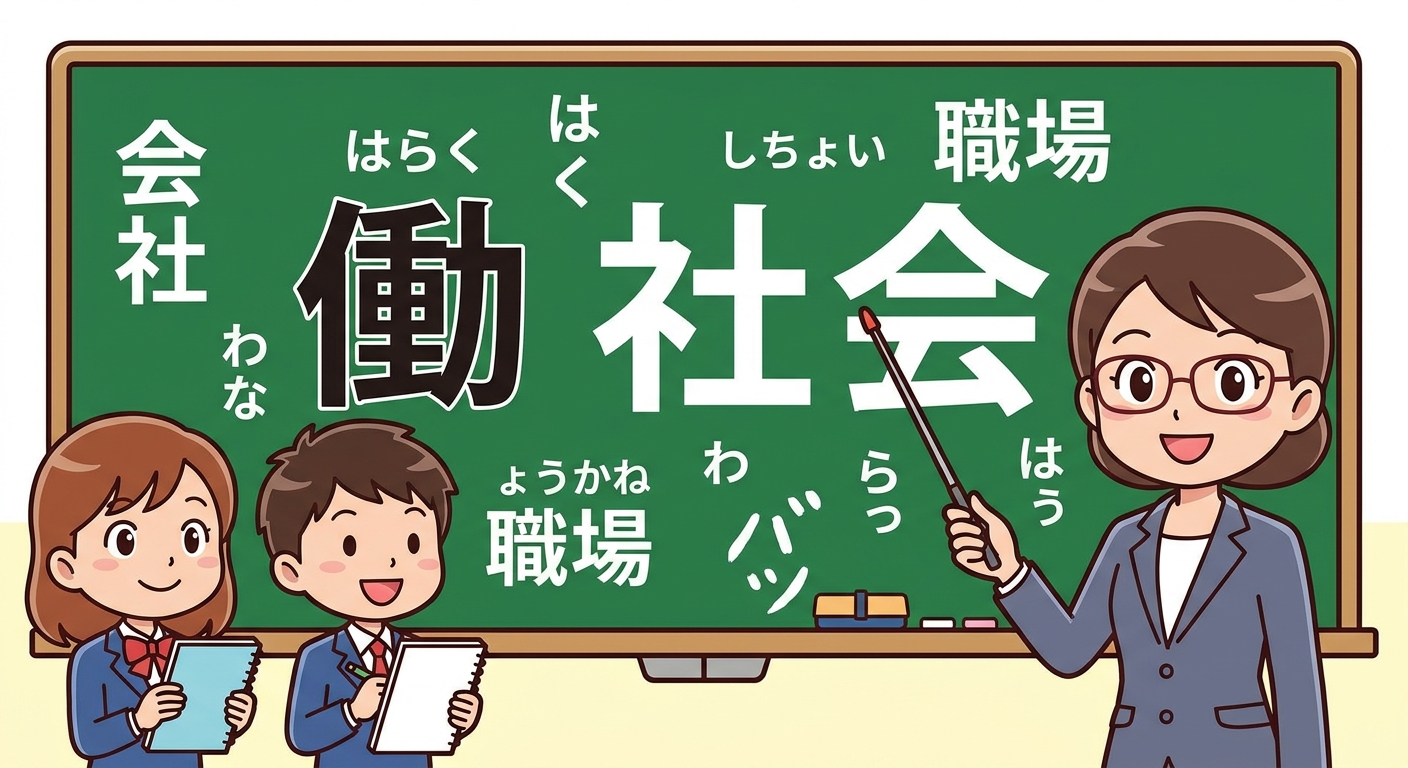
Introduction
Transitioning to the JLPT N3 level requires moving beyond daily life vocabulary into the realms of professional and social spheres. This lesson, "Work and Society Kanji," is designed to equip you with the essential characters needed to navigate Japanese workplaces, read news articles, and understand societal structures. You will master kanji related to employment, industry, public service, and social organization. By understanding the core meanings and readings of these characters, you will build a strong foundation for professional communication, helping you transition smoothly from casual Japanese to the formal language used in business and society.
Lesson Content
Master Class: Work & Society Kanji (仕事と社会) — JLPT N3
Welcome, learner! Transitioning from daily-life Japanese to professional and societal contexts is one of the most exciting milestones of the JLPT N3 level.
To navigate Japanese workplaces and news, you must master the kanji that build the vocabulary of employment, labor, and corporate society. Today, we will break down four essential N3 Kanji, analyze their components, and see how they function in real-world grammar structures.
1. 職 (Job, Employment, Office)
- On’yomi (Chinese Reading): ショク (Shoku)
- Kunyomi (Japanese Reading): None (commonly used in compounds)
- Radical: 耳 (Ear) — Mnemonic: At a job (職), you must keep your ears (耳) open to instructions.
Essential Vocabulary
- 職業 (しょくぎょう): Occupation, profession
- 転職 (てんしょく): Career change (literally: "moving jobs")
- 退職 (たいしょく): Retirement, resigning from a job
Example Sentence
彼はキャリアアップのために転職を決意した。
Kare wa kyaria-appu no tame ni tenshoku o ketsui shita.
Translation: He decided to change careers to advance his career.
Grammar Note: 〜のために (N3) here indicates purpose ("for the sake of / in order to").
2. 求 (Seek, Request, Demand)
- On’yomi: キュウ (Kyū)
- Kunyomi: もと.める (Moto.meru)
- Stroke Tip: Start with the central vertical hook, followed by the left and right strokes. Do not confuse it with 水 (water).
Essential Vocabulary
- 求人 (きゅうじん): Job recruitment / Job offer (literally: "seeking people")
- 要求 (ようきゅう): Demand, request
- 求める (もとめる): To seek, to request (Verb)
Example Sentence
多くの企業が優秀な人材を求めている。
Ōku no kigyou ga yūshū na jinzai o motomete iru.
Translation: Many companies are seeking talented human resources.
Particle Breakdown: を marks the direct object (人材 - talent), followed by the transitive verb 求める in its continuous (~ている) state.
3. 給 (Salary, Provide, Feed)
- On’yomi: キュウ (Kyū)
- Kunyomi: None (in common N3 usage)
- Radical: 糸 (Thread) — Mnemonic: Connecting threads together to supply/provide resources.
Essential Vocabulary
- 給料 (きゅうりょう): Salary, wages
- 支給 (しきゅう): Payment, allowance, provision
- 有給休暇 (ゆうきゅうきゅうか): Paid leave (often abbreviated as 有給 yūkyū)
Example Sentence
わが社は交通費が全額支給されます。
Waga sha wa kōtsūhi ga zengaku shikyū saremasu.
Translation: Our company pays travel expenses in full.
Grammar Note: 支給されます is the passive form (受身形) of 支給する, commonly used in business to sound objective and polite.
4. 労 (Labor, Toil, Trouble)
- On’yomi: ロウ (Rō)
- Kunyomi: ねぎら.う (Negira.u - to thank for good service)
- Radical: 力 (Power/Strength) — Mnemonic: Expending physical power (力) under a burning roof (the top component) represents hard labor.
Essential Vocabulary
- 労働 (ろうどう): Manual labor, work
- 苦労 (くろう): Hardship, trouble, toil
- 労働基準法 (ろうどうきじゅんほう): Labor Standards Act (highly relevant for working in Japan!)
Example Sentence
現代の日本社会では、労働環境の改善が叫ばれている。
Gendai no Nihon shakai de wa, rōdō kankyou no kaizen ga sababarete iru.
Translation: In modern Japanese society, the improvement of working environments is being clamored for.
Grammar Note: 〜つつある (N3 - "is in the process of") could also be used here to express ongoing change: 改善されつつある (is gradually being improved).
Quick Review Quiz
Can you read the underlined words and translate this sentence?
A社の①求人に応募したが、②給料の条件が合わなかった。
(Answer: ① きゅうじん - job post, ② きゅうりょう - salary. "I applied for Company A's job opening, but the salary conditions did not match.")
Keep practicing these kanji in context, and you will quickly master the language of the Japanese professional world! がんばってください!
Exercises
Work and Society Kanji (Exercises)
Exercises for Work and Society Kanji
Review the grammar and vocabulary, and try to fill in the blanks or write sentences based on the prompts.
Examples
最近の日本の社会では、労働環境の改善が進んでいます。
Saikin no Nihon no shakai de wa, rōdō kankyō no kaizen ga susunde imasu.
In recent Japanese society, improvements in the working environment are progressing.
彼は新しい職業に挑戦するために、転職することを決めた。
Kare wa atarashii shokugyō ni chōsen suru tame ni, tenshoku suru koto o kimeta.
He decided to change jobs in order to challenge himself in a new occupation.
この企業は、社員の努力に対して十分な給料を払っている。
Kono kigyō wa, shain no doryoku ni taishite jūbun na kyūryō o haratte iru.
This company pays sufficient salaries in response to its employees' efforts.
Practice Drills
Lesson Materials
Vocabulary (5)
Grammar (3)
Kanji (3)
Kana (0)
No kana characters in this lesson.